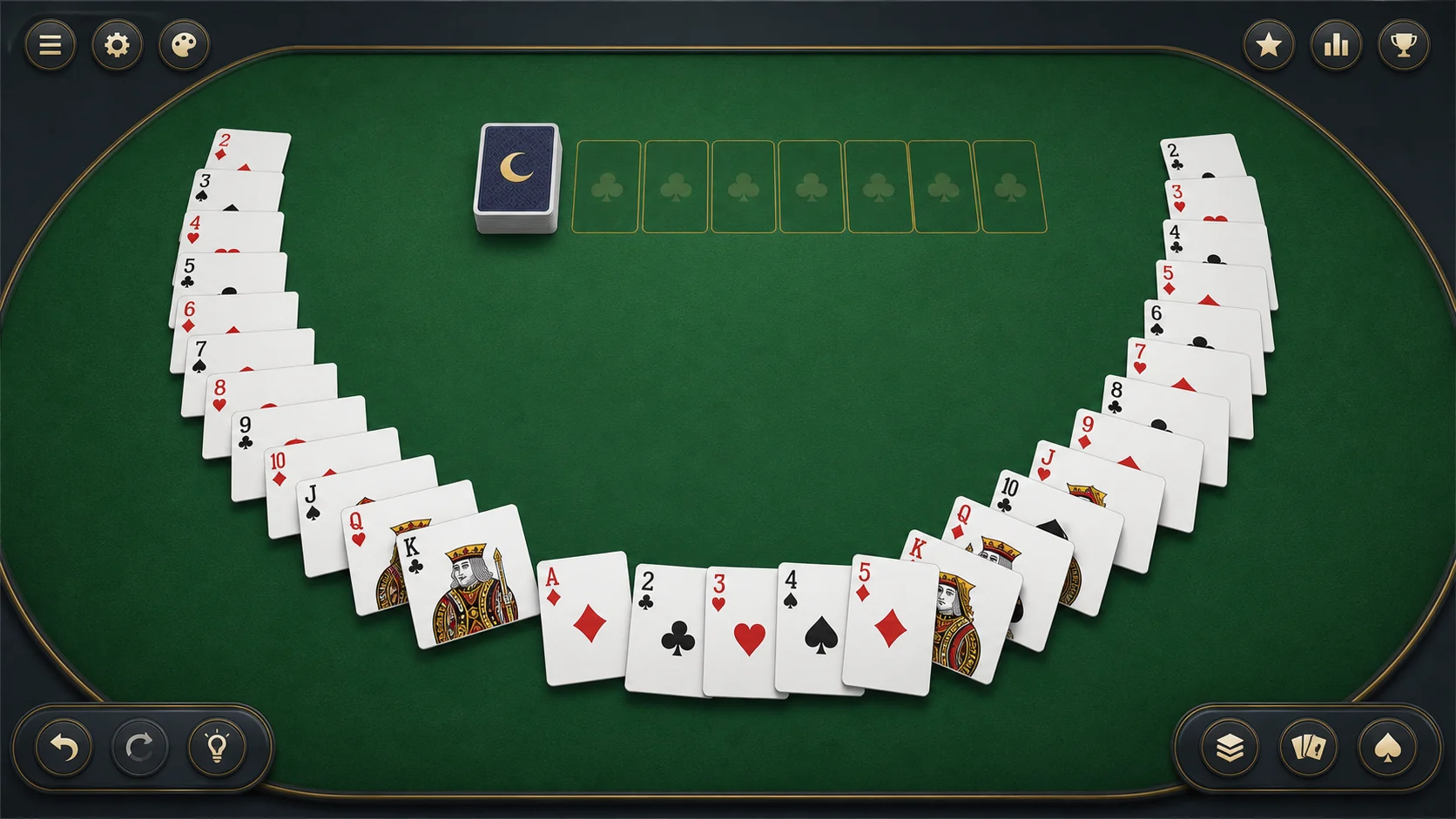
Crescent Solitaire is easier to play when the whole shape is visible. The game depends on comparing many top cards at once: sixteen crescent piles, four upward foundations, four downward foundations, and a small number of remaining cycles. When the board is squeezed into a narrow space, you may miss the one card that keeps a suit moving. Full-screen play is not decoration. It is a practical way to read the table.
On a larger board, your eyes can move from the center to the outer piles without constantly scrolling or leaning into the screen. That matters because Crescent Solitaire asks for repeated scans. You check the Ace foundations, check the King foundations, then inspect the top cards around the crescent for same-suit neighbors. The less cramped the board feels, the more likely you are to catch a quiet winning move.
Why Full Screen Helps
The biggest advantage is foundation awareness. In a small layout, the outer piles often steal attention because they contain most of the cards. The foundations become a small center detail. In full screen, the center stays readable, so you are less likely to forget a foundation-ready card while rearranging tableau piles.
Full screen also reduces misclicks. Crescent Solitaire piles can sit close together, especially on laptops and tablets. A wider board gives each pile more room, which makes it easier to select the intended top card and destination. That does not change the strategy, but it removes a source of cheap mistakes.
How to Use the Larger View
When you enter full screen, do not simply play faster. Use the space to build a better habit. Start every turn by reading the foundations from left to right. Name the next card each one wants. Then scan the crescent for those ranks. After that, look for tableau moves that reveal covered cards or keep adjacent suit ranks available.
This routine sounds formal, but it becomes quick. The board is visible enough that the scan takes only a few seconds. Over a full deal, those seconds save far more time than random movement would.
Comfort During Longer Deals
Some Crescent Solitaire deals end quickly. Others become slow work, especially when middle cards are buried and the cycles must be timed carefully. Full-screen play makes those longer deals more comfortable. The cards are easier to read, the pile counts are easier to follow, and the whole crescent feels more like a card table than a small widget in a page.
If you play several deals in a row, comfort matters. A tired player cycles early, misses foundation moves, and starts treating legal moves as good moves. A clear board helps keep the session deliberate.
When Full Screen Is Not Enough
A larger view will not rescue every deal. Some layouts are naturally stubborn, and some decisions still require patience. Full screen helps you see the position; it does not remove the need to choose well. If a deal stalls, step back and ask whether the next useful card is visible, one tableau move away, or likely to require a cycle.
You can use the full-screen button on the Crescent Solitaire game whenever you want a cleaner table. It is especially useful on compact screens, but even desktop players benefit from seeing the crescent and foundations at once.
The mode is also helpful when learning. Keep the guide idea in mind while the board is enlarged: foundations first, top cards second, cycles last. With more space, that order becomes easier to follow because every part of the table stays in view. You spend less effort hunting for cards and more effort deciding whether a move truly opens the deal.