Crescent Solitaire Online Free
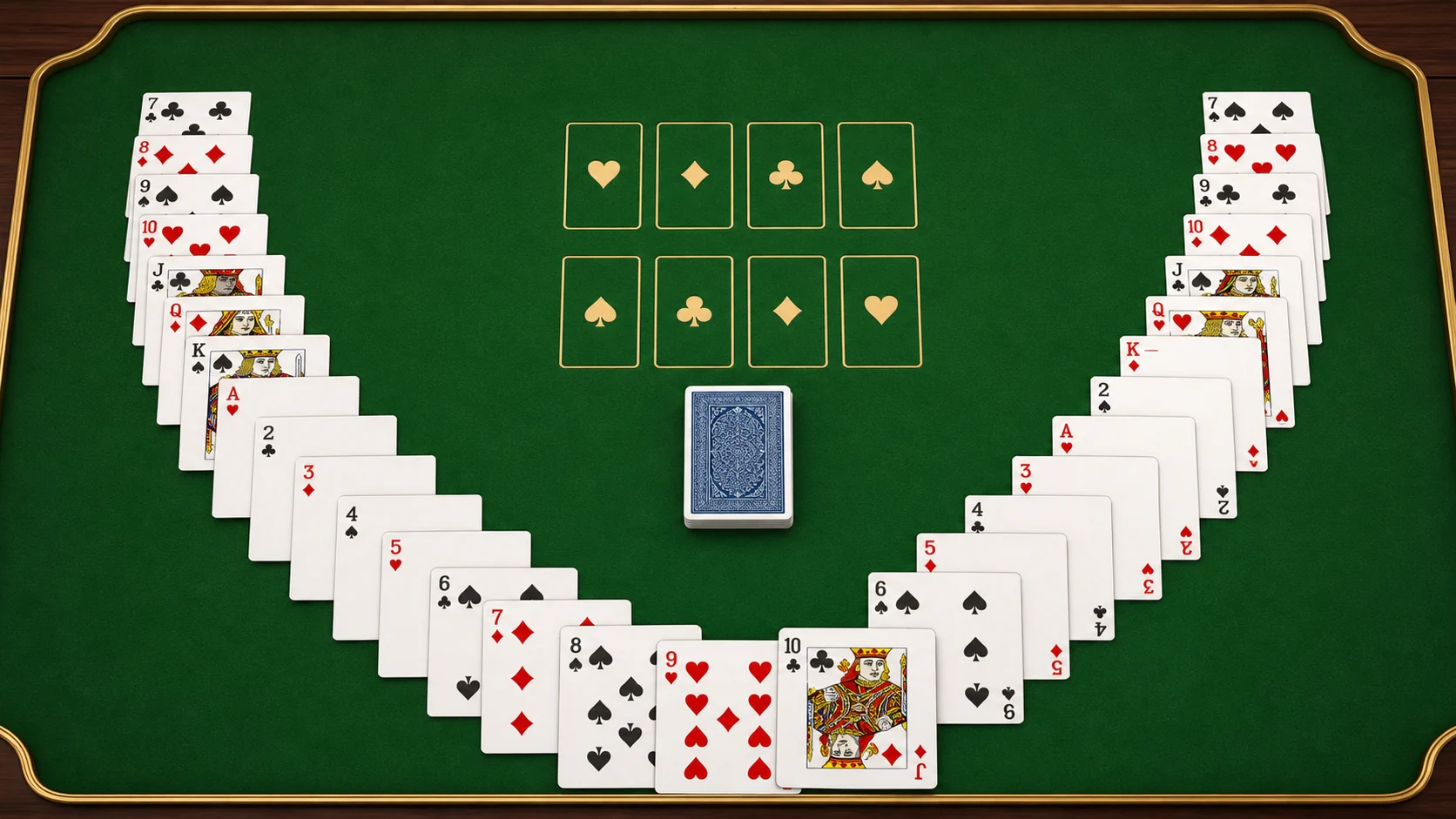
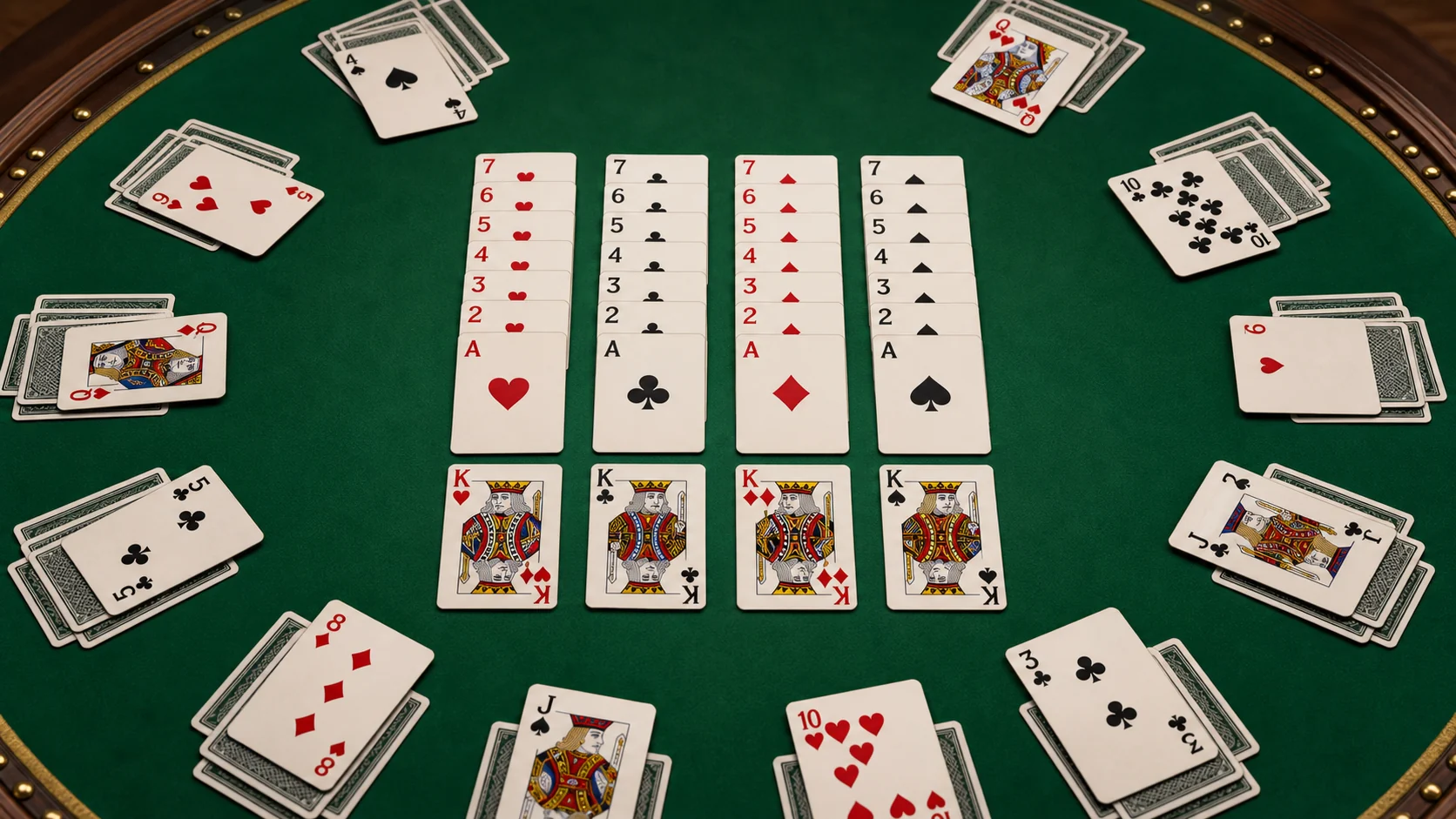
Crescent Solitaire is a captivating two-deck game characterized by its unique, semi-circular outer layout surrounding eight central foundation piles. The core objective is crystal clear: every exposed card on the board must serve a purpose, whether it is building an Ace foundation up, packing a King foundation down, or uncovering a more useful card trapped within the crescent.
This page keeps the game close to the player’s needs. You get a clean explanation of how Crescent Solitaire works, what to watch for before using a reshuffle, and why familiar searches such as crescent solitaire aarp, crescent solitaire bliss, and crescent solitaire full screen all point to the same thing: players want a readable table and rules that do not get in the way.
At a glance
- Two standard decks create a 104-card puzzle.
- Sixteen crescent piles feed the foundations.
- Ace foundations build upward by suit.
- King foundations build downward by suit.
Why Play Crescent Solitaire on Our Site?
Crescent Solitaire is at its best when the rules are clear before the first move. Our pages avoid vague solitaire advice and focus on the decisions that actually matter in this variant: foundation timing, top-card access, same-suit transfers, and the limited chances to cycle the crescent piles.
The site is built for players who want useful context fast. The homepage gives the core idea, the guide library expands the tricky parts, and each article stays close to real board situations instead of padding the topic with generic card-game history.

What Makes Crescent Solitaire Different?
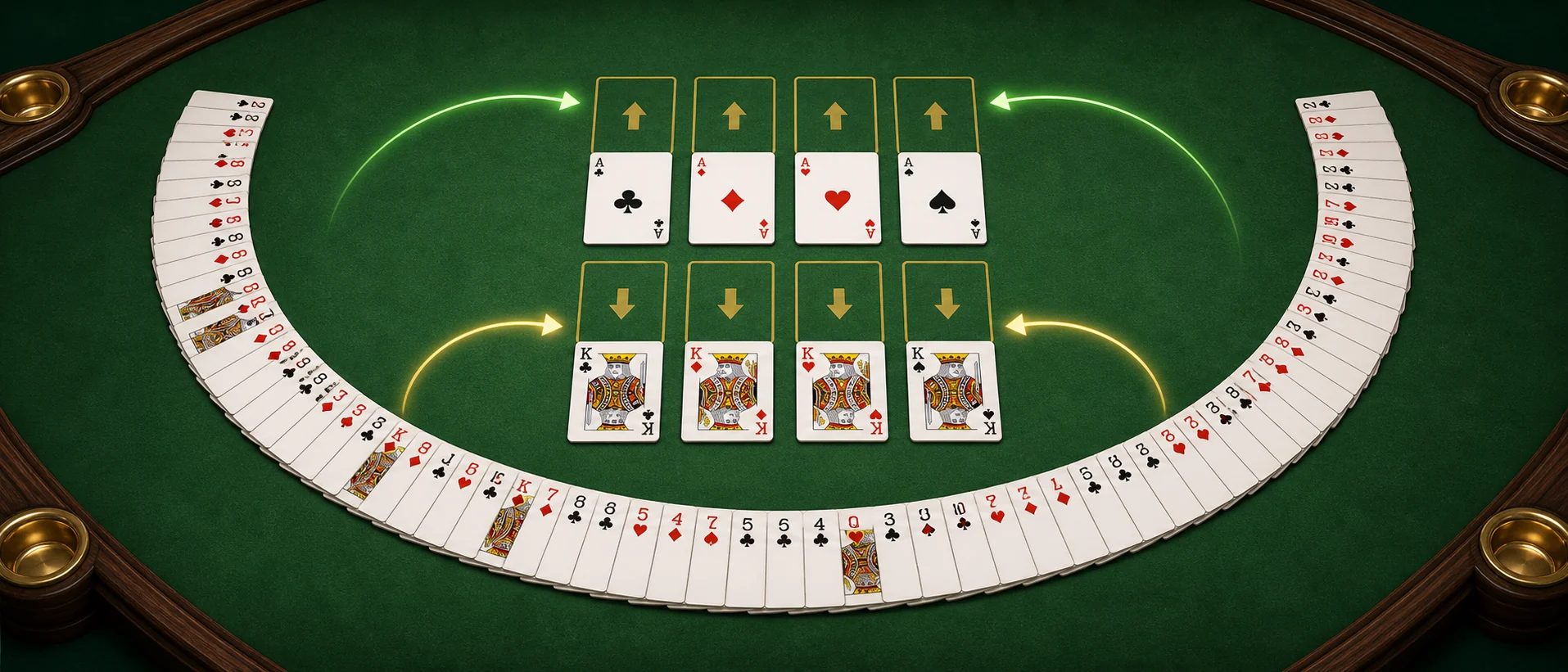
Crescent Solitaire is built around pressure from both directions. Four foundations begin with Aces and climb toward Kings. Four more begin with Kings and descend toward Aces. Around them sits a curved ring of sixteen piles, each holding face-up cards. You win by clearing the crescent into those foundations without wasting the few ways you have to refresh the pile order.
The game rewards patience in the old card-table sense: you study the visible tops, move only what helps, and avoid stirring the crescent just because a move is legal. A good Crescent Solitaire page should support that rhythm with clear language, quick orientation, and practical guidance.
If you prefer Crescent Solitaire full screen layouts, the same principle applies everywhere: keep the whole crescent visible, scan the foundations first, and avoid spending moves before you know which suit is ready to progress.
The Table in Plain English
Start from the top cards
Only the exposed top card of each crescent pile can move. That keeps every decision honest because a useful buried card may need several careful transfers before it appears.
Build foundations by suit
Ace foundations build upward to King. King foundations build downward to Ace. Suits must match, and foundation progress is the only path to victory.
Use tableau moves to unjam the board
A top card may move onto another top card of the same suit if it is one rank higher or lower. This gives you room to expose blocked cards and delay reshuffles.
Cycle piles only when needed
The reshuffle button moves the bottom card of each pile to the top. You get three uses, so spend them after the natural moves have dried up.
Small Decisions That Win More Deals
- Check both foundation directions before moving a card around the crescent.
- Prefer moves that reveal a new top card over moves that merely rearrange the same problem.
- Do not trap a foundation-ready card under another tableau card unless it opens something better.
- Keep same-suit neighbors close; they become escape routes when a foundation is not ready.
- Use the first reshuffle late enough that it changes the board, not just the scenery.
- When two legal moves are equal, choose the one that keeps more foundation options open.